
The AI transformation of urban planning
It is estimated that over 89% of the US will live in urban areas by the year 2050, a trend that is on par with many developing countries. This brings massive economic opportunity and cultural impact, but this rapid urbanization also comes with challenges. The rise of emerging technologies like machine learning and artificial intelligence (AI) can help communities find solutions for issues such as resource utilization, sustainability, and safety in public utilities, transportation, infrastructure, and the environment. These new technologies can help create foundational data that can be leveraged to enhance public policy and action-oriented decisions. Pedestrian walkability and safety studies that are leveraging the power of AI for right-of-way data are an example of an innovative approach that is being used by a rising number of municipalities, cities, regional transportation organizations, and federal agencies.
The need for digital twins & nationwide right-of-way map data
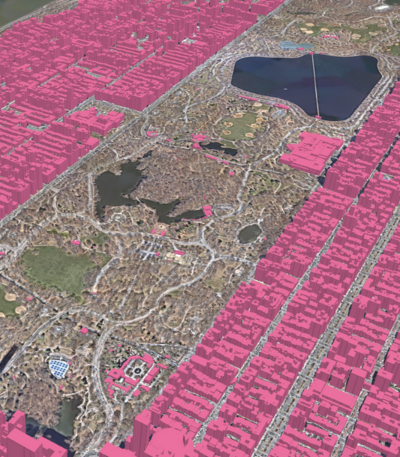
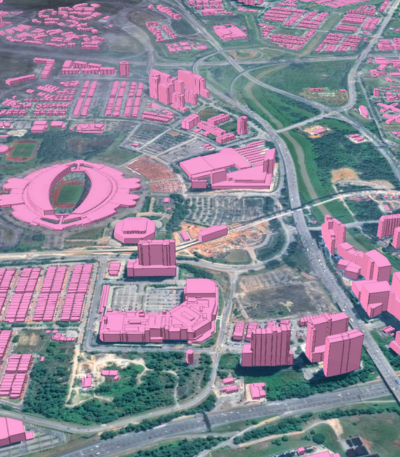
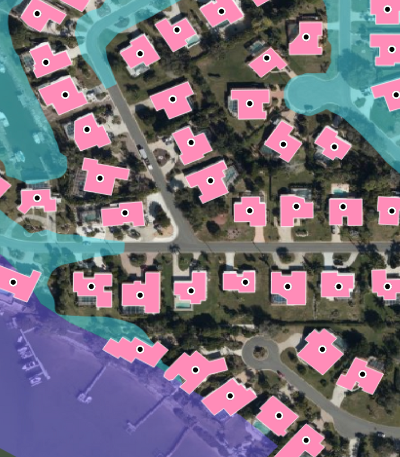
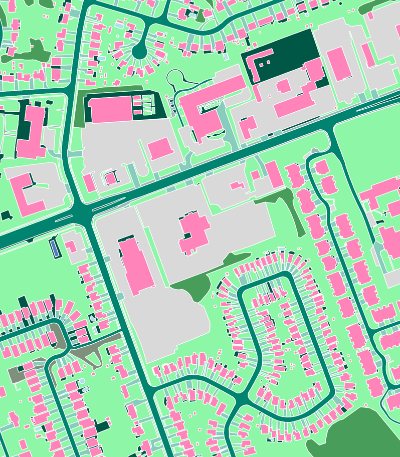
Today, it is possible to create a digital representation of our physical world at scale and use these ‘digital twins’ of cities and large areas to make data-backed decisions with far-reaching implications. For more than a decade, Ecopia AI (Ecopia) has used its proven proprietary AI-based systems to extract transportation, land cover, and building footprints from high-resolution geospatial imagery. Ecopia creates high-precision map data that is accurate, comprehensive, and up-to-date with the real world. This data is embedded into hundreds of customer applications spanning 100+ countries around the world. This includes organizations such as the Chicago Metropolitan Agency for Planning, the State of California, the National Oceanic and Atmospheric Administration (NOAA), and the Bill & Melinda Gates Foundation, amongst others.
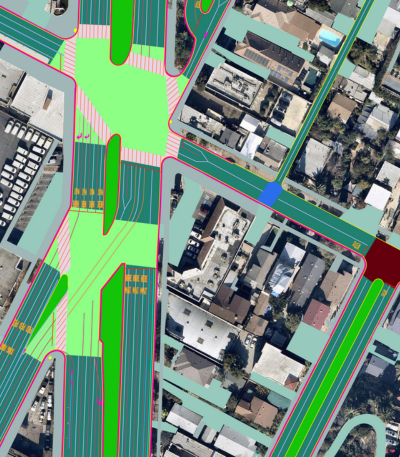
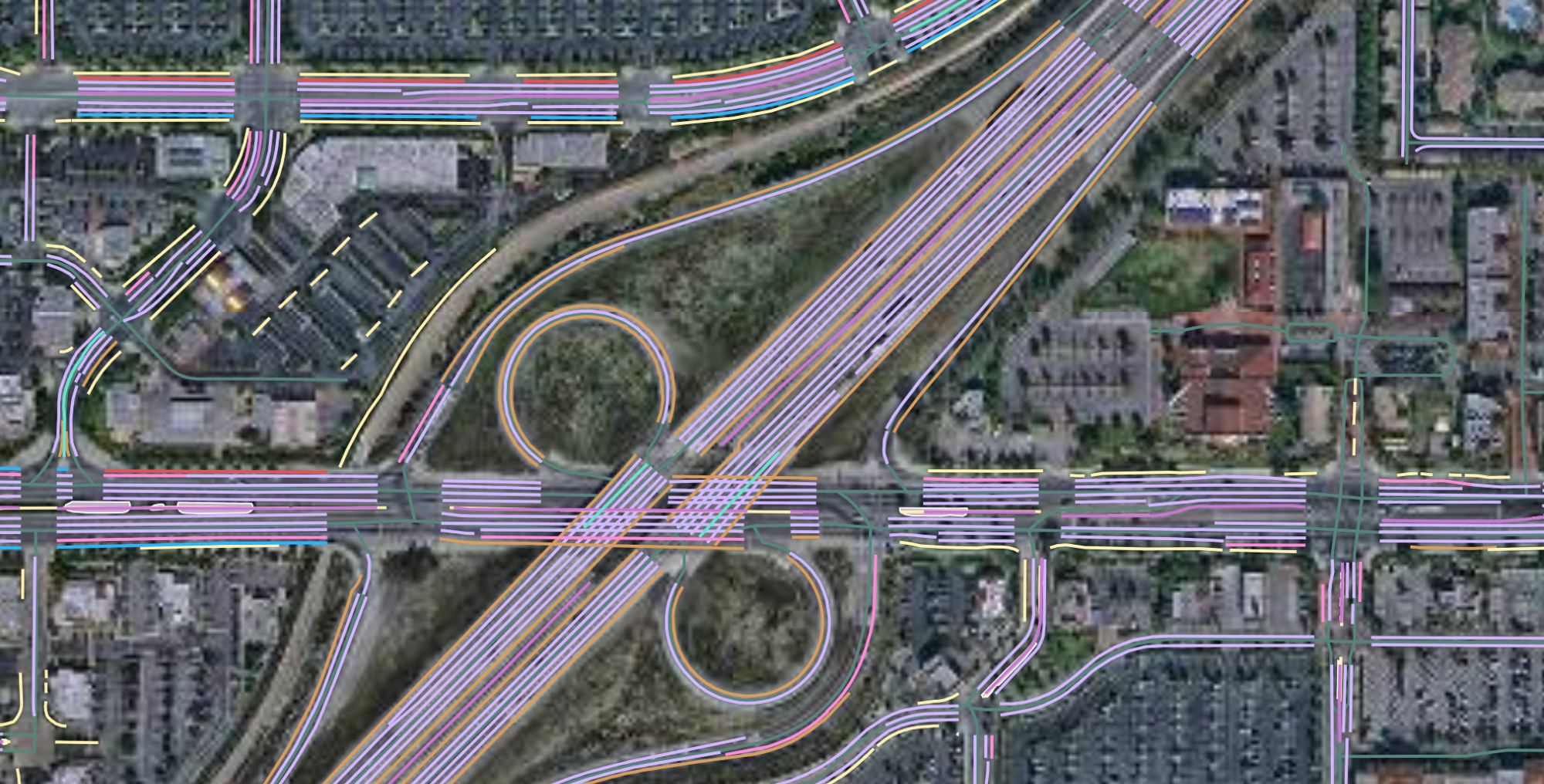
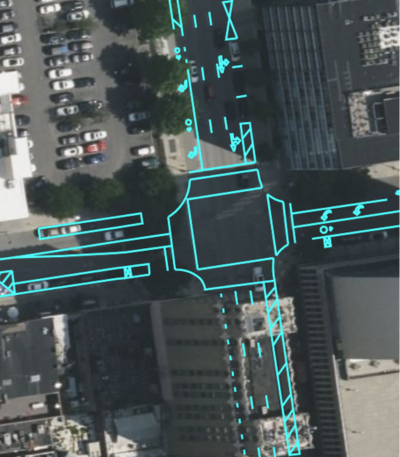
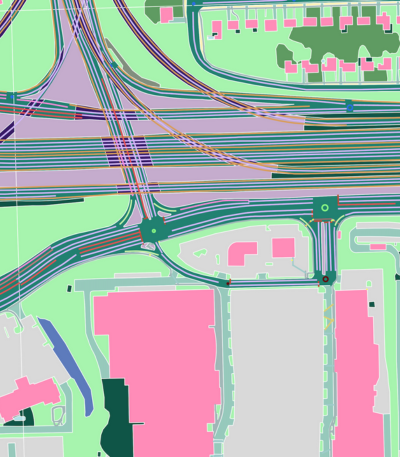
Ecopia’s AI-based systems can extract advanced right-of-way (RoW) features from high-resolution imagery that provide deeper insights and better decision-making across applications such as:
- Improving bicycle and pedestrian connections
- Identifying crossing spacing and gaps in active networks
- Identifying right-of-way opportunities
- Tree canopy expansion and urban heat mitigation
- Systemic safety and risk factor identification
- Public works management
- Compliance with accessibility requirements
- Vision Zero program support
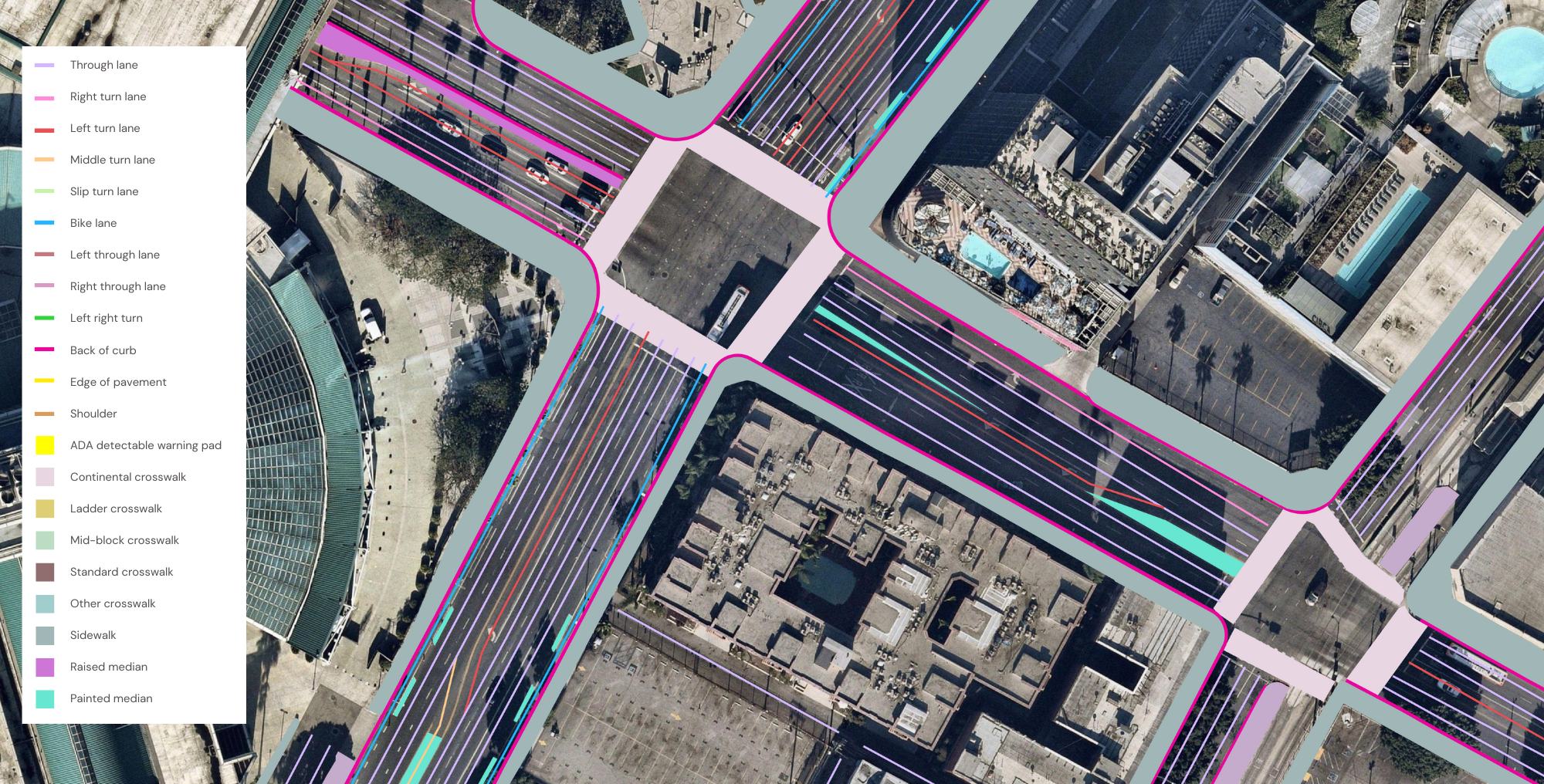
Ecopia is on a mission to ensure that RoW data covering the entirety of the US is readily available off-the-shelf, along with on-demand feature extraction services to suit custom requirements. A key aspect of this strategy is to work with city planners, architects, civil engineers, and consultants who are at the forefront of transportation innovation, such as the team at Alta Planning + Design (Alta).
Creating future-ready communities with GeoAI
Alta Planning + Design is a leading consulting organization focused on providing transportation infrastructure planning and design services for active and healthy communities. Oftentimes, communities ask Alta what is missing in their understanding of conditions on the ground, and more often than not, existing RoW inventories of sidewalks, crosswalks, and other types of multimodal infrastructure are outdated, in hard-to-use formats, lack necessary coverage, or don’t exist.
Alta works with Ecopia data to inform their understanding of important components of multimodal infrastructure. Ecopia’s ability to build digital twins of communities enables Alta to identify gaps and improvements that can help communities meet their full potential. Using this data, Alta is able to provide their clients with high-quality imagery and data at scales and on timelines that are extremely hard to achieve through just aerial review and fieldwork. A diverse set of Alta’s projects is already benefiting from Ecopia data, including Safe Routes to School programs, countywide active transportation plans, systemic safety analysis, mobility plans, and heat reduction studies.
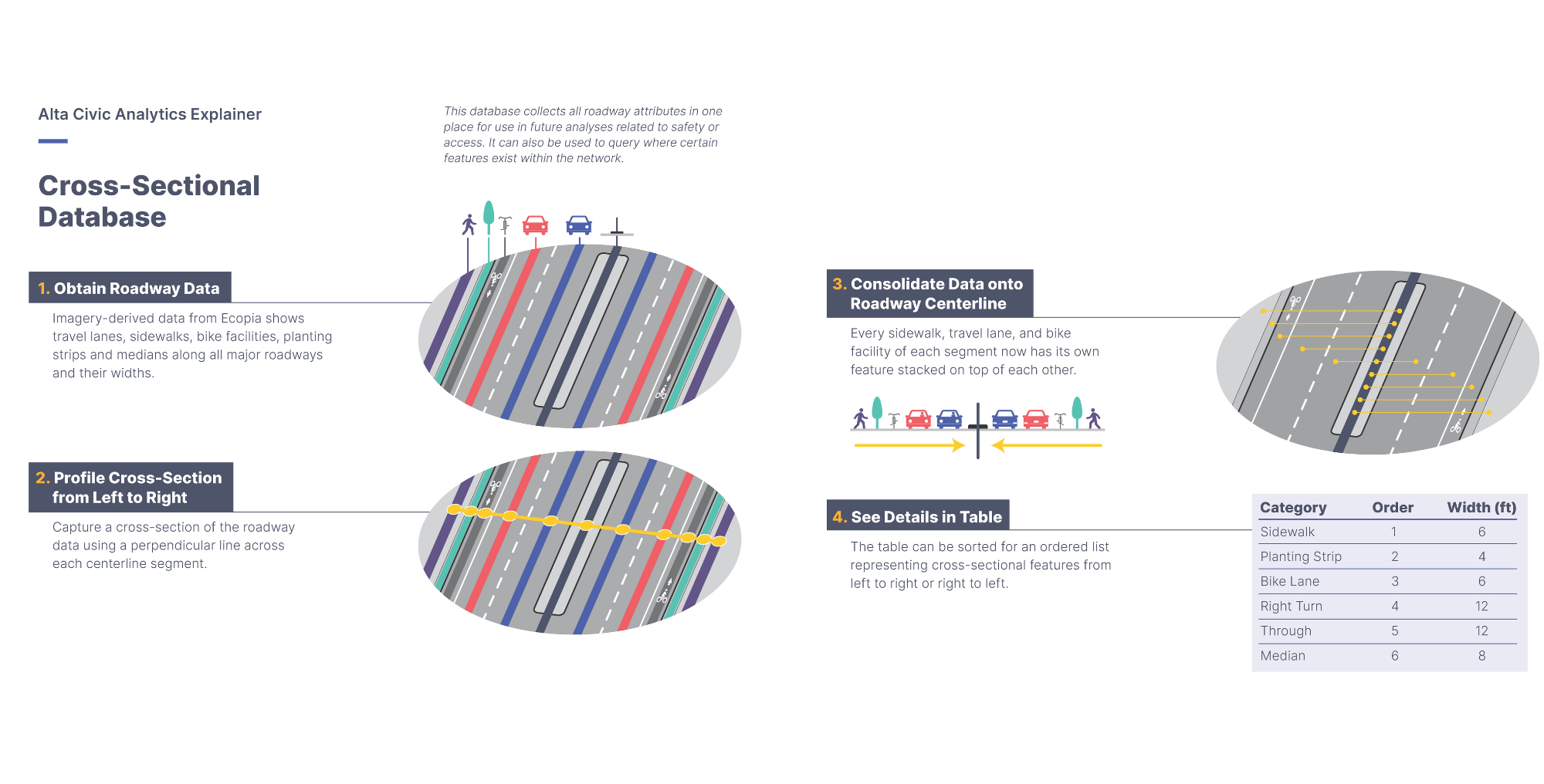
Alta's Civic Analytics practice envisions a future of custom spatial and web tools that build upon this foundational data, such as Ecopia’s advanced right-of-way features. The firm is already using Ecopia standardized data products to build tools so they can efficiently understand the availability and quality of infrastructure and its relationship to street connectivity and access.
Urban greening & mitigating extreme heat
For example, Alta is focused on how to mitigate the urban heat island effect. Ecopia's cost-effective transportation and tree cover extractions are important components to understand the dynamics of shade and other factors impacting radiant heat. This can be used to identify countermeasures and tools to cool down streets and improve traveler comfort.
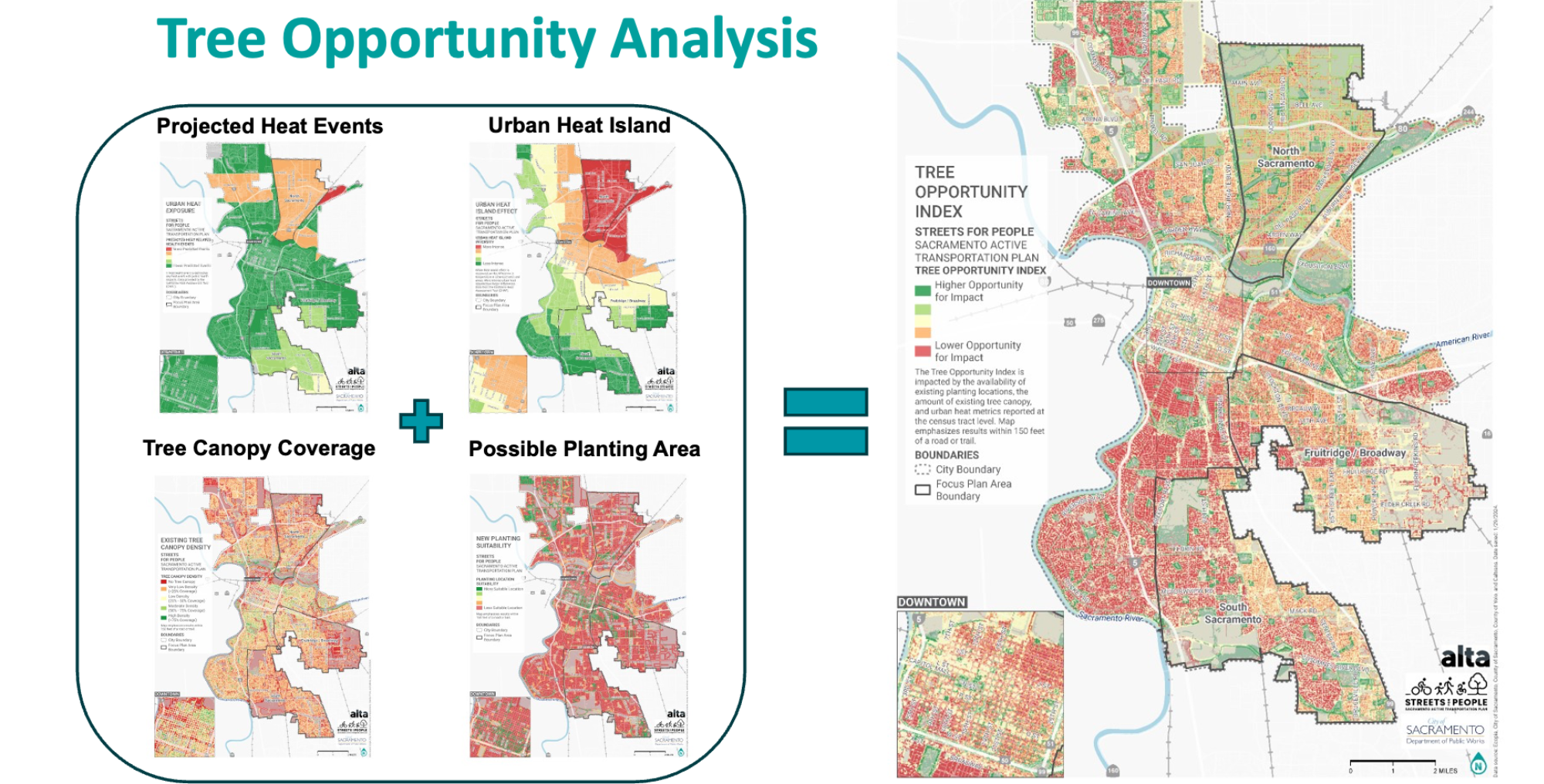
Through a recent collaboration, Alta leveraged Ecopia tree canopy, pervious cover, and planter locations with data from the California Heat Assessment Tool (CHAT) to develop a tree opportunity analysis and complement a city-wide active transportation study for Sacramento. This culminated in a Tree Opportunity Index (TOI) that combined the identification of criteria related to a lack of tree canopy and heat exposure, and those related to possible planting areas, such as pervious land cover and on-street planter areas without tree canopy. Alta then used a small hexagonal grid to try to capture street-to-street variations in these opportunity locations. This analysis was integrated with Alta’s bicycle and pedestrian gap analysis, examining the alignment of high-opportunity zones with high-stress streets for pedestrians and cyclists, and the findings have played a significant role in guiding the project team towards coordinating tree planting with possible upcoming active transportation projects.
Measuring multimodal connectivity & understanding gaps
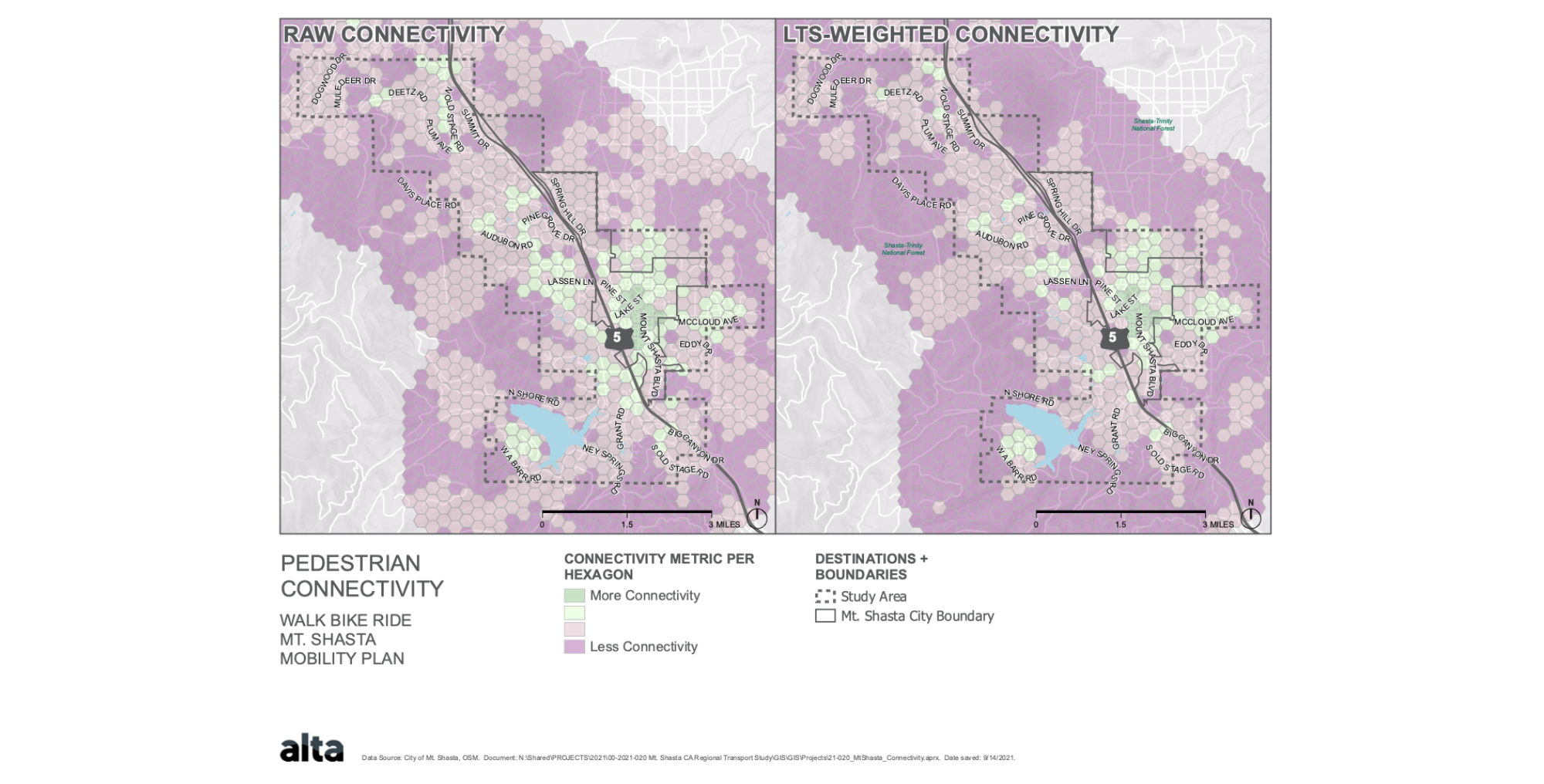
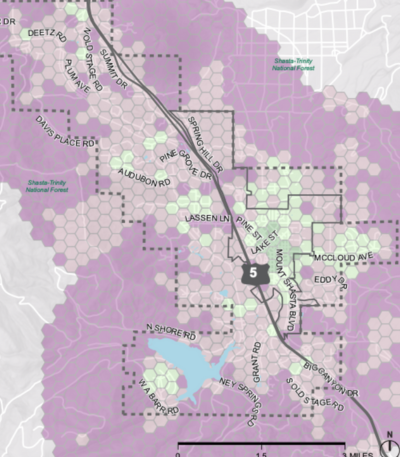
For another project, Alta used Ecopia’s bike and pedestrian data to assess connectivity in Mt. Shasta’s transportation networks and calculate walkshed and bikeshed areas, comparing the distance one could travel in an unobstructed straight line to the actual reachable area within the same timeframe, given real-world barriers. By comparing these areas to ideal circular zones, Alta derived connectivity ratios for walking and biking routes.
Additionally, Alta developed level of traffic stress (LTS) metrics that combined Ecopia’s sidewalk data with factors such as speed limits to evaluate comfort and safety for pedestrians and cyclists. These metrics can be used to adjust a network analysis of people’s reach on the active network based on whether or not the connections provided are both available and comfortable for the typical pedestrian or cyclist.

This analysis revealed how connectivity varies when traffic stress is considered across Mt. Shasta.
Ecopia & Alta: combining expertise to better serve communities
The integration of AI into urban planning is transforming how we understand, design, and optimize built environments. Through advanced geospatial analytics and the creation of a digital twin, organizations like Ecopia and Alta Planning + Design are redefining data-driven decision-making for safer, more sustainable, and more connected communities.
To learn more about Ecopia’s civil engineering and transportation planning work, contact our team. To learn more about Alta Planning + Design’s Civil Analytics Practice, click here.
****
About Alta Planning + Design
Alta Planning + Design is an active transportation company dedicated to creating active, healthy communities through the planning, landscape architecture, engineering, and education/encouragement programs. Alta was founded in 1996 when cities and communities were calling for safer streets for people walking and bicycling, as the non-motorized transportation movement developed into a profession in the United States. We pioneered the field of active transportation, evolving our planning and design work into a visionary global practice that empowers people to live active, healthy lives and gets them to where they need to go.
About Ecopia AI
Ecopia is on a mission to create a digital twin of the Earth. We leverage artificial intelligence to convert high-resolution imagery into high-precision 3D vector map data at scale. This data creates a digital representation of the physical world, forming the foundation of a digital twin for visualization, analytics, and decision-making. Ecopia’s data is leveraged by hundreds of commercial and government organizations across more than 100 countries around the world.
Learn more about Ecopia's civil engineering solutions

Ready to get started?
