
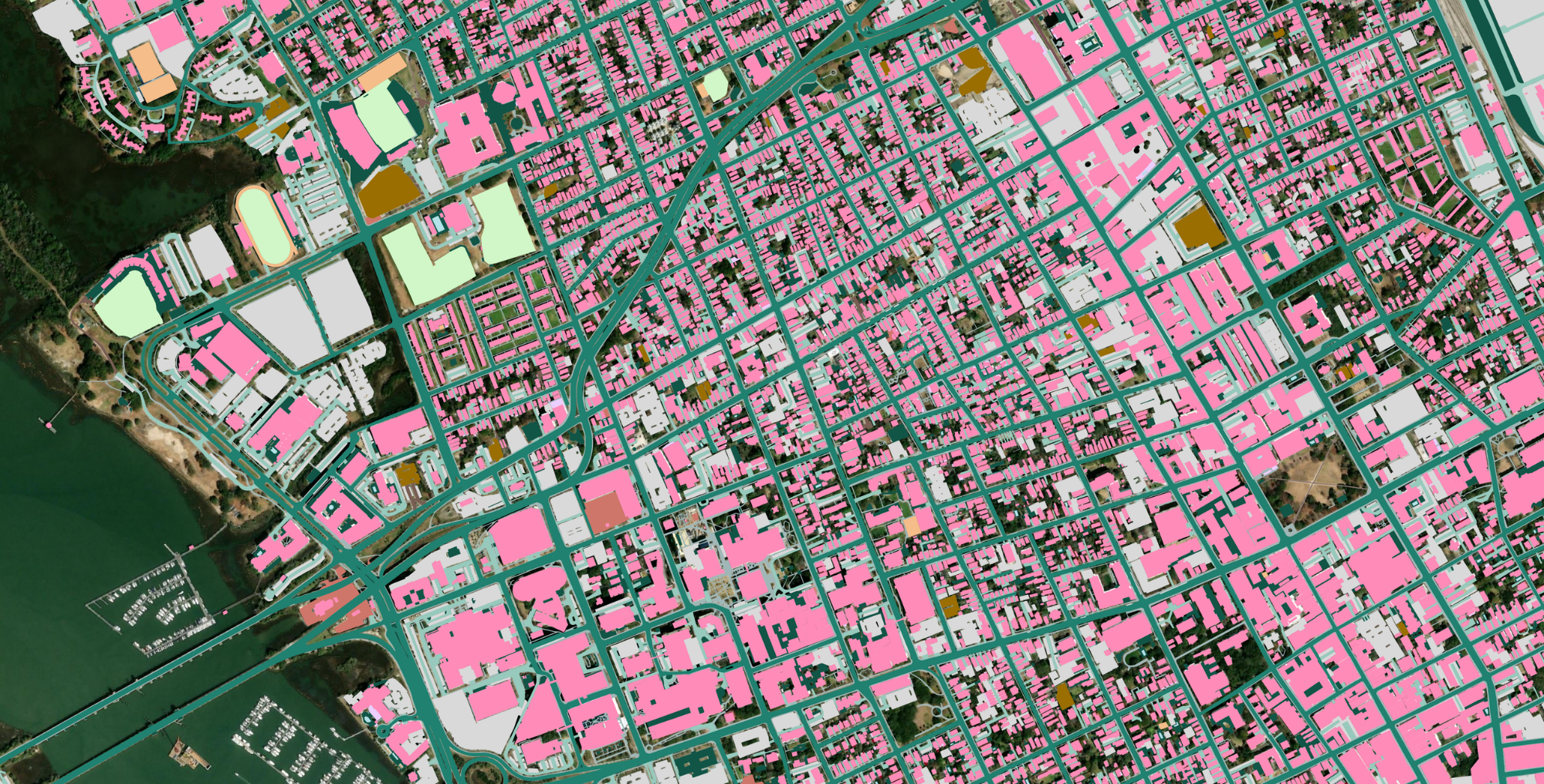
Geospatial data is no longer just a supporting resource for civil engineering teams; it's foundational. From transportation planning and flood modeling to stormwater utility management and infrastructure design, accurate and current spatial data is what keeps projects moving efficiently.
Yet despite its importance, many organizations still spend significant time manually digitizing land use and transportation assets from aerial imagery. It's a process that can be costly, time-consuming, and difficult to maintain at scale.
In a recent webinar hosted by the American Society of Civil Engineers (ASCE), industry leaders from Black & Veatch, Kimley-Horn, and Alta Planning + Design explored how AI-generated geospatial data is helping organizations reduce that burden, improving project accuracy and accelerating infrastructure workflows across stormwater utility analysis, floodplain modeling, transportation planning, and roadway safety.
Here's a summary of what they shared.
Why civil engineering teams are moving beyond manual digitization
Open data is great when it exists, when it's current, and when it covers the area you need. But in practice, publicly available datasets are often outdated, incomplete, or too coarse for project-level analysis. That's the gap Ecopia AI (Ecopia) is designed to fill.
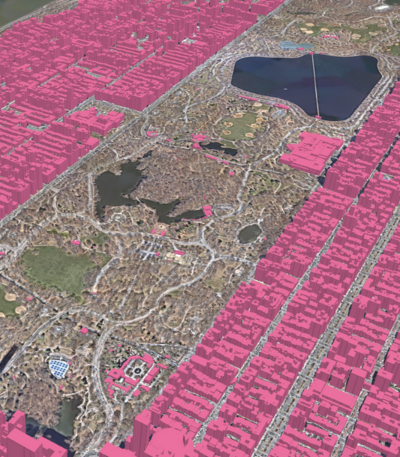
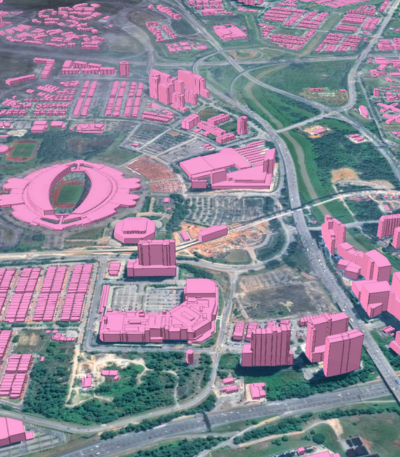
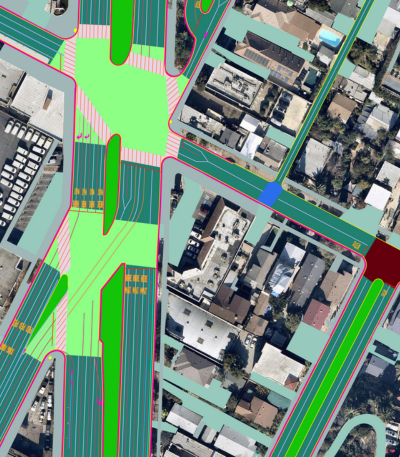
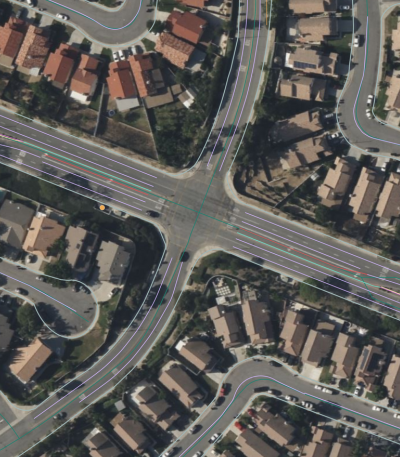
Using deep learning applied to high-resolution aerial imagery from providers like Nearmap, Vexcel, and Eagleview, Ecopia extracts over 80 distinct feature types, from sidewalks and crosswalks to road markings, curbs, building footprints, and impervious surfaces, and delivers them as ready-to-use vector data in formats compatible with Esri, Autodesk, and Bentley workflows.
The core value proposition for civil engineers: instead of spending weeks manually digitizing features from imagery, you can pull down pre-built, AI-generated data and redirect that time toward actual project work.
Ecopia's Advanced Transportation Features and 3D Land Cover data were both front and center during the webinar. Here's how three firms are putting them to work.
Stormwater utility billing: Black & Veatch on the City of Charleston

Taylor Holiday, a senior analyst with Black & Veatch's infrastructure advisory division, walked through a stormwater utility fee update project for the City of Charleston, South Carolina.
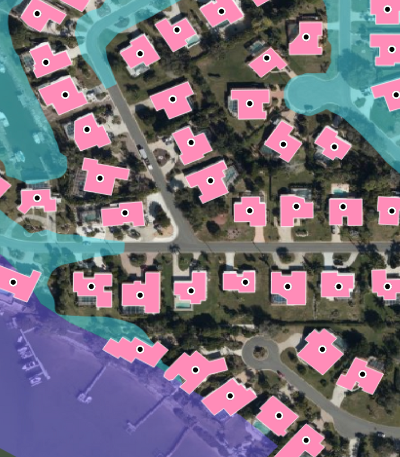
Stormwater utilities are one of the more data-intensive areas of municipal finance. Because you can't meter stormwater runoff the way you meter water or electricity, roughly 87% of the more than 2,000 stormwater utilities in the US use impervious areas as the basis for user fees. That means the accuracy of the underlying parcel and surface data directly affects how much revenue a utility can recover.
When Black & Veatch was brought in, Charleston was migrating billing systems and updating its impervious area database, simultaneously a significant undertaking that left little room for the months-long manual digitization process that would normally be required.
Ecopia delivered the impervious area capture in approximately two weeks, broken into 14 land use classifications (driveways, parking areas, rooftops, sports fields, and more). The Black & Veatch team then consolidated those into four categories aligned with the city's fee structure. Critically, because the underlying classification data is preserved, if the city ever adjusts its fee policy (say, to charge partially for unpaved surfaces), the reclassification can happen quickly, without a full re-capture.
For more on how impervious surface data supports stormwater planning, see Ecopia's civil engineering industry page.
HEC-RAS flood modeling: Kimley-Horn on a central Illinois solar project

Melissa Duyar and Anna Zalinsky from Kimley-Horn's surface water team shared a sensitivity analysis they ran for a solar development project in central Illinois across a roughly 12-square-mile model area, mostly agricultural, with streams, forested patches, and a small college campus.
The team tested three land use data sources as inputs to their 2D HEC-RAS hydraulic model:
- National Land Cover Database (NLCD): Fast to obtain, but coarse resolution. Acceptable for preliminary studies, not detailed enough for final design.
- Hand-delineated layer: The previous best practice. Accurate, but extremely time-consuming. At 12 square miles, manageable; at 100+ square miles (which many Kimley-Horn models cover), the manual effort becomes a real constraint.
- Ecopia AI-generated land cover: Detailed building footprints, sidewalks, paved surfaces, and forested areas captured automatically, then supplemented by hand for stream channels identified through terrain and preliminary depth results.
The Ecopia layer produced depth results on the solar site that differed from the hand-delineated results by 3 to 12 inches in certain areas, driven primarily by the more detailed representation of impervious surfaces in the urban areas. That level of precision matters when you're specifying panel pile heights and evaluating erosion potential around foundations.
The takeaway from the Kimley-Horn team: AI-generated land cover is not a full substitute for domain expertise, but it gives modelers a high-quality starting point that dramatically reduces the time spent editing shapefiles.
Transportation planning: Alta Planning + Design on Greensboro's safety action plan

David Wasserman of Alta Planning + Design presented a highly technical and detailed case study on AI-derived cross-sectional databases for active transportation and safety planning.
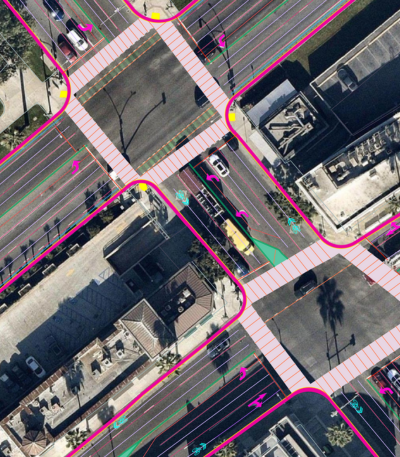
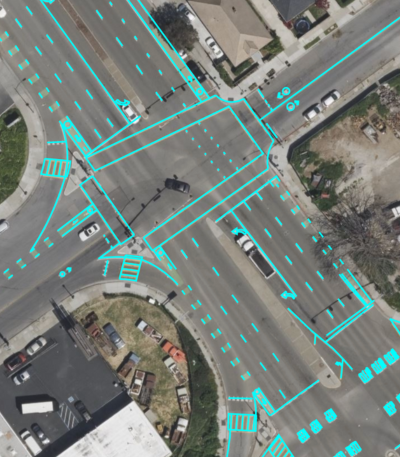
Alta uses Ecopia's HD vector roadway extractions (lane markings, curbs, sidewalks, crosswalks, bike facilities, etc.) to construct GIS databases for their clients that profile the horizontal cross-section of roadways. Each roadway segment is characterized left-to-right: how many lanes, what type of center treatment, sidewalk presence and buffer width, bike lane type, and so on. That structured data then powers a range of downstream analyses.
For the Greensboro MPO’s Safety Action Plan, Alta applied the cross-sectional database to:
- Bicycle and pedestrian level of traffic stress (LTS) scoring: quantifying how comfortable a given segment is for people of varying ages and abilities, based on factors like lane count, speed limit, sidewalk buffering, and crossing geometry.
- Risk factor mapping: identifying where contextual variables (through-lane counts, lane width, curb-to-curb width, crosswalk spacing) correlated with elevated rates of severe collisions. The analysis found that segments with more complex cross-sections (more unique roadway elements) also tended to carry a disproportionate share of severe crashes.
- Origin-destination analysis: combining LTS scores with travel demand data to locate high-impact network gaps where infrastructure improvements would benefit the most users.
Alta has extended the same approach to other projects: in Phoenix, the cross-sectional database helped identify where excess right-of-way could be reallocated if travel lanes were narrowed to minimum guidance widths. In Sacramento, combining Ecopia impervious surface and tree canopy data produced a tree opportunity index; a hex-grid analysis pairing heat exposure and canopy gaps with available planting areas to guide urban forestry investment.
For civil engineers working on transportation planning, this kind of structured, replicable asset database is a significant step forward from point-in-time manual inventories.
For more on how AI data supports regional transportation workflows, see Ecopia's civil engineering industry page.
Accessing Ecopia's pre-built national asset map dataset
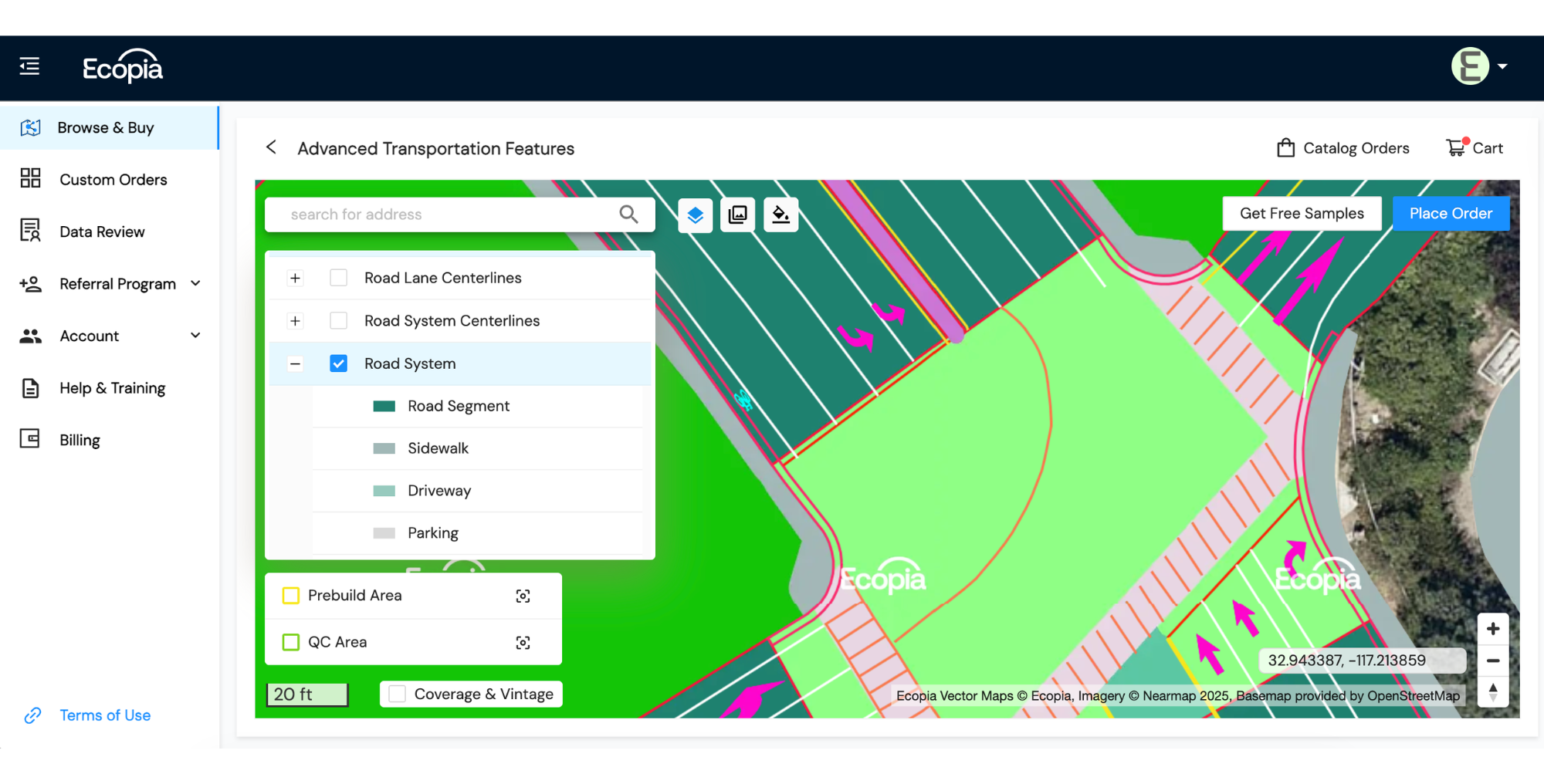
To show how to access the data that was used by Black & Veatch, Kimley-Horn, and Alta, Bill Singleton provided a walkthrough of Ecopia's data portal, where civil engineers and planners can explore and download pre-built vector data for cities across the US.
Key points:
- The portal provides free access to browse available data, check imagery vintage, and preview accuracy before committing to a download.
- Every registered user can download one free square mile of data to evaluate in their own environment.
- Data is available in three main categories: 3D Land Cover (impervious surfaces, buildings, trees), Advanced Transportation Features (centerlines, lane markings, curbs, crosswalks), and 3D building geometry (LOD 1.3 and LOD 2.3 for advanced visualization).
- Ecopia aims to have complete coverage of the contiguous US in the coming months using aerial imagery from Nearmap, Vexcel, Eagleview, and Hexagon.
- Custom extractions are also available, including from client-supplied imagery for projects requiring specific vintages or proprietary data sources.
Data is delivered in standard GIS formats (shapefile, geojson) and goes directly into Esri, Autodesk, and Bentley applications without additional software or retooling.
Learn more about Ecopia's data portal and product offerings.
Watch the full ASCE webinar on AI vs. manual approaches to mapping
The full recording covers additional Q&A on topics including historical imagery analysis and change detection, underground utilities (surface and above-grade only, with subsurface data merged by partners), and international data availability across more than 100 countries.
Whether you're evaluating AI-generated data for the first time or looking to expand how your team uses it, the webinar is a practical, use case-driven starting point.
Watch the full ASCE webinar: AI vs. Manual Approaches to Digitizing Land Use and Transportation Asset Map Data ↓
[video] https://www.youtube.com/watch?v=-S2PPiZkicc
To explore available datasets for your next project, visit Ecopia's data portal or get in touch with the team.
Learn more about Ecopia's civil engineering solutions

Ready to get started?
