

Geographic information systems (GIS) is no longer a standalone field. In today’s data-driven world, geospatial data underpins everything from infrastructure planning and environmental modeling to insurance risk assessment and consumer navigation. But the value of geospatial data is only as strong as its quality.
This guide breaks down geospatial data quality, including key evaluation metrics like accuracy, precision, and recall, the 4 Cs framework, and best practices for ensuring reliable mapping data.
What is geospatial data quality?
Geospatial data quality refers to how well geographic data represents the real world. High-quality data enables accurate map visualizations, improved analytics, better decision-making, and more reliable outcomes across GIS, computer-aided design (CAD), and data science workflows.
Poor data quality, on the other hand, can lead to:
- Inaccurate map visualizations
- Incorrect modeling outputs
- Misinformed decisions
- Increased costs and delays
- Regulatory and compliance risks
[slider]
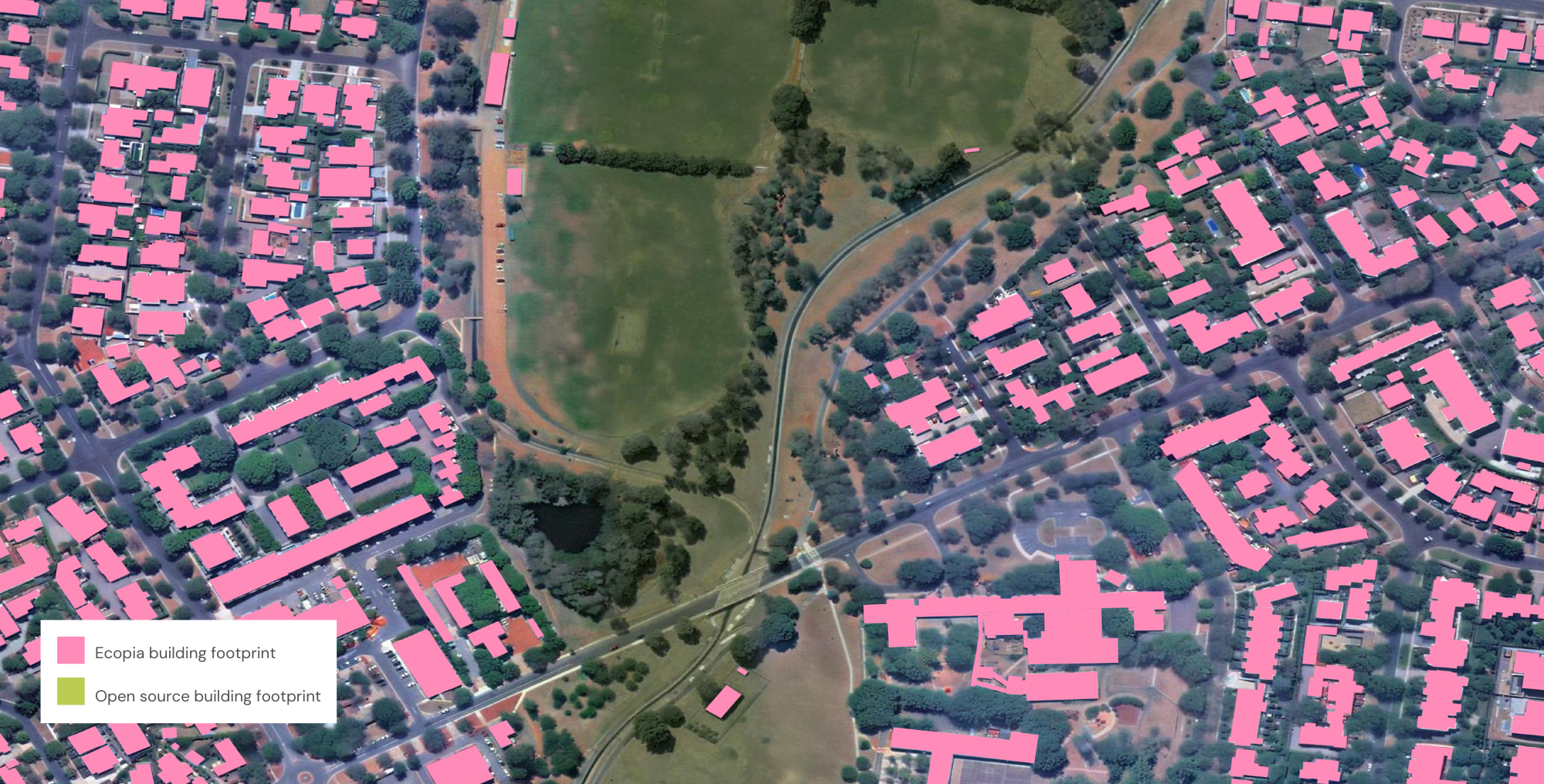
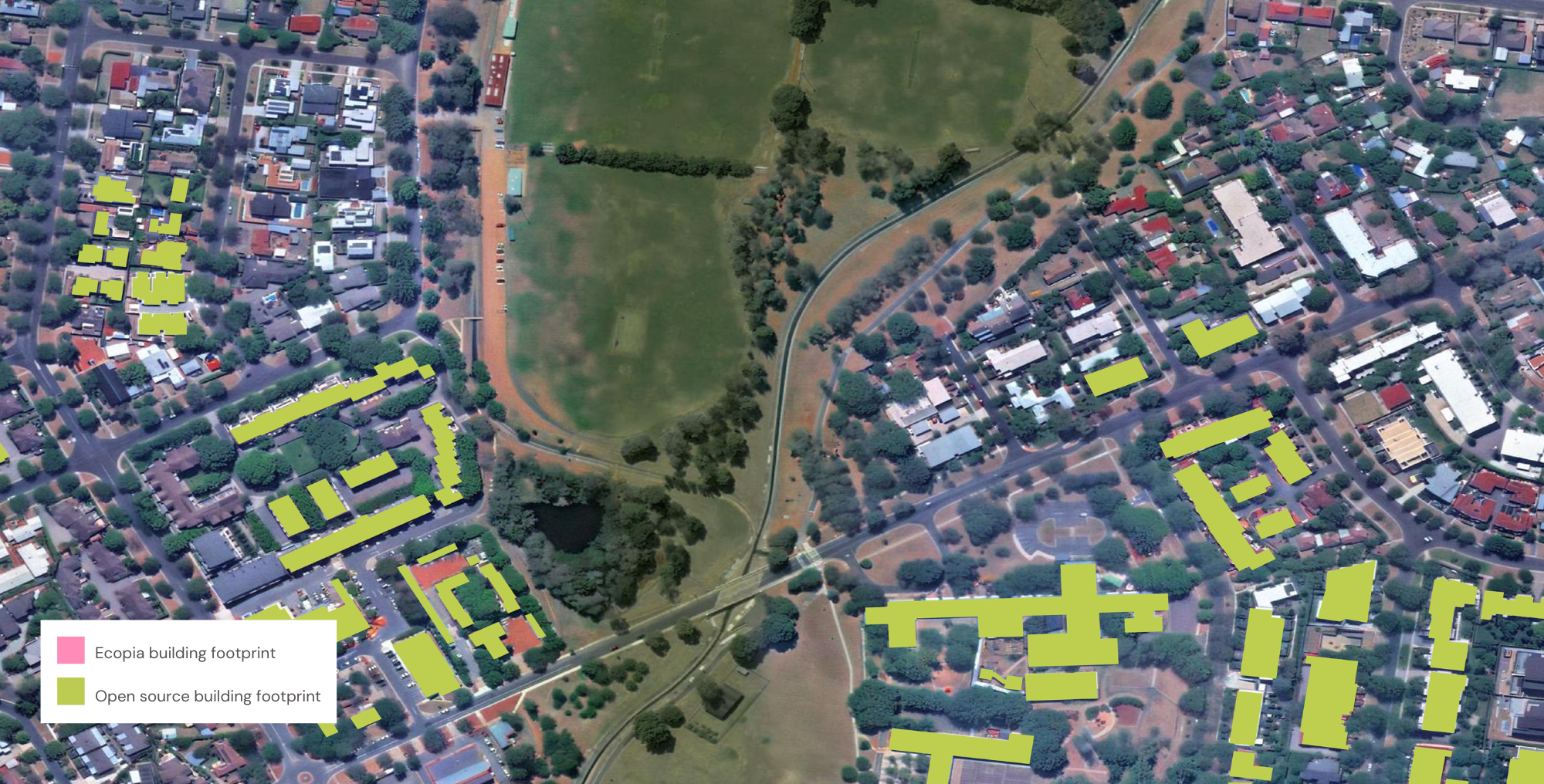
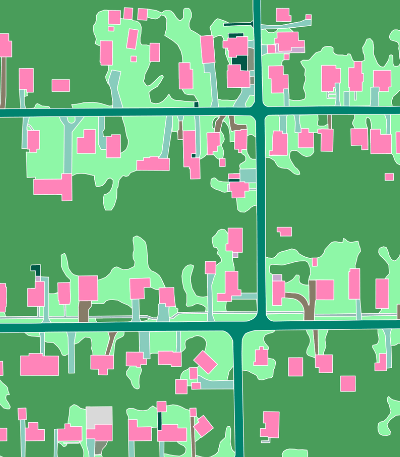
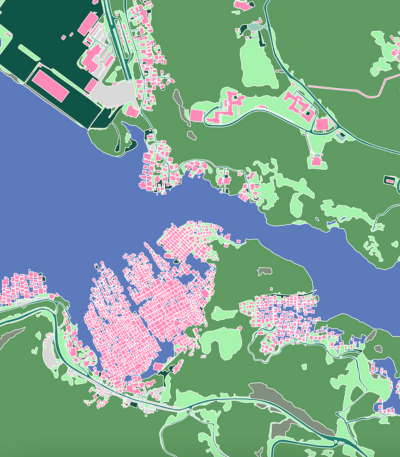
An example of differing data completeness and accuracy in Canberra, Australia between Ecopia and another data provider.
Geospatial data evaluation metrics
There are a variety of evaluation metrics used in validation and quality assurance or quality control workflows to benchmark datasets against ground truth, compare different data sources or creation methods, and ensure that geospatial data is reliable enough to support map production, analysis, and decision-making. Four of the most common qualitative metrics to assess are accuracy, precision, recall, and F1 scores.
Accuracy
Accuracy measures how close the data is to the real-world truth. In geospatial terms, this can include:
- Positional accuracy: how close features are to their true location, often measured as a distance error between the mapped feature and a trusted ground truth source
- Thematic accuracy: the percentage of features correctly classified or labeled

Precision
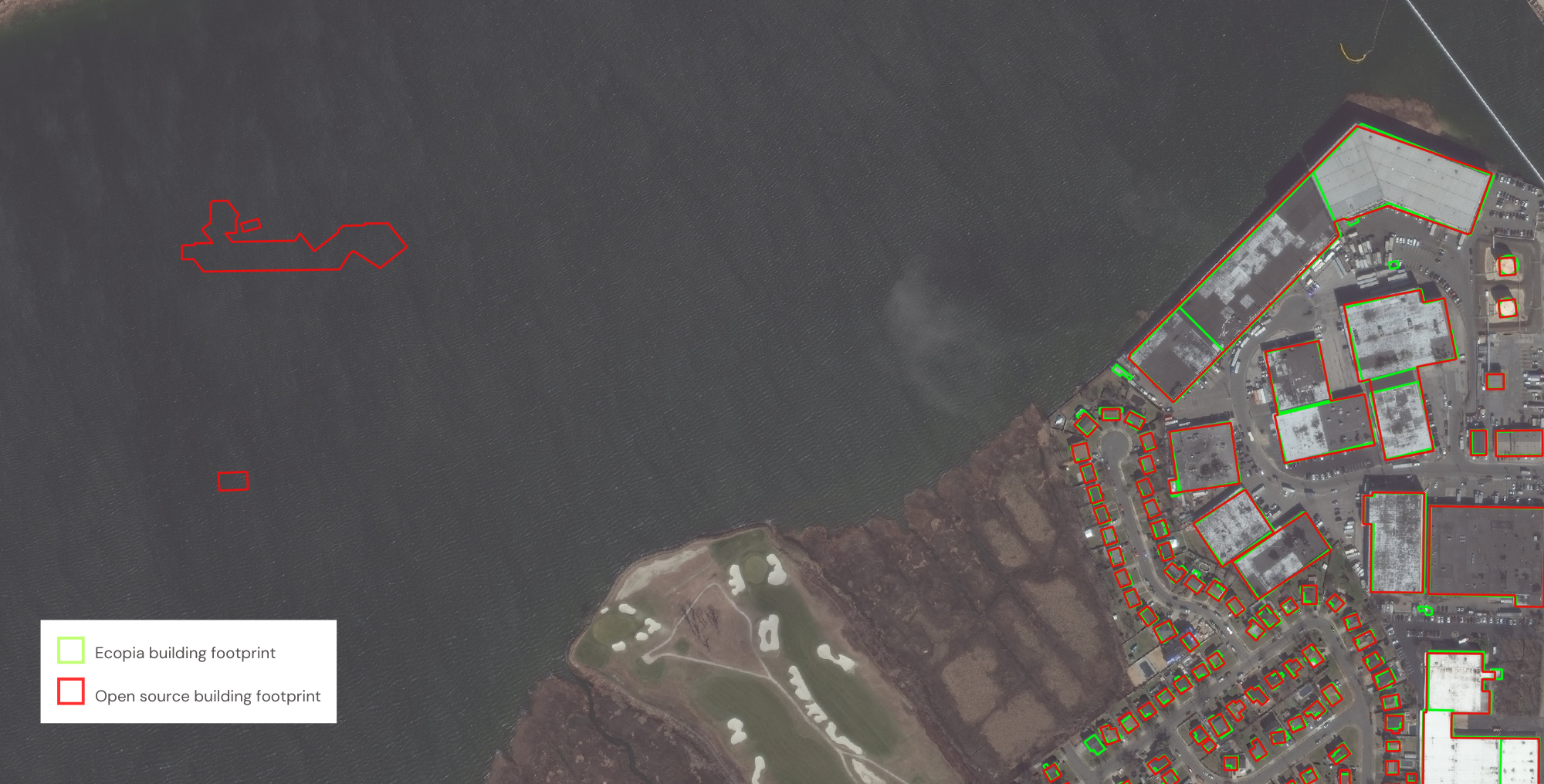
Precision measures how many features are actually correct. High precision means fewer false positives.
Formula: Precision = true positives / (true positives + false positives)
Recall
Recall measures how many real-world features were successfully created. High recall means fewer false negatives.
Formula: Recall = true positives / (true positives + false negatives)
F1 score
There is often a trade-off between precision and recall. Increasing precision may reduce recall (fewer false positives, but more missed features), while increasing recall may reduce precision (more detections, but more false positives).
To balance precision and recall, an F1 score is commonly used. It provides a single metric that accounts for both false positives and false negatives.
Formula: F1 score = 2 ((precision x recall) / (precision + recall))
A high F1 score means strong overall model performance and is especially useful when both errors (false positives and false negatives) matter.
The 4 Cs of geospatial data quality
A simple and widely used framework for evaluating geospatial data quality with these qualitative metrics is the 4 Cs. Rather than relying on individual metrics in isolation, this approach recognizes that data quality is multi-dimensional, encompassing not just accuracy, but also coverage, standardization, and freshness. By using the 4 Cs as a guiding structure, organizations can more systematically assess datasets, identify gaps or risks, and ensure their geospatial data is reliable and fit for purpose across a wide range of applications.
Completeness
[slider]


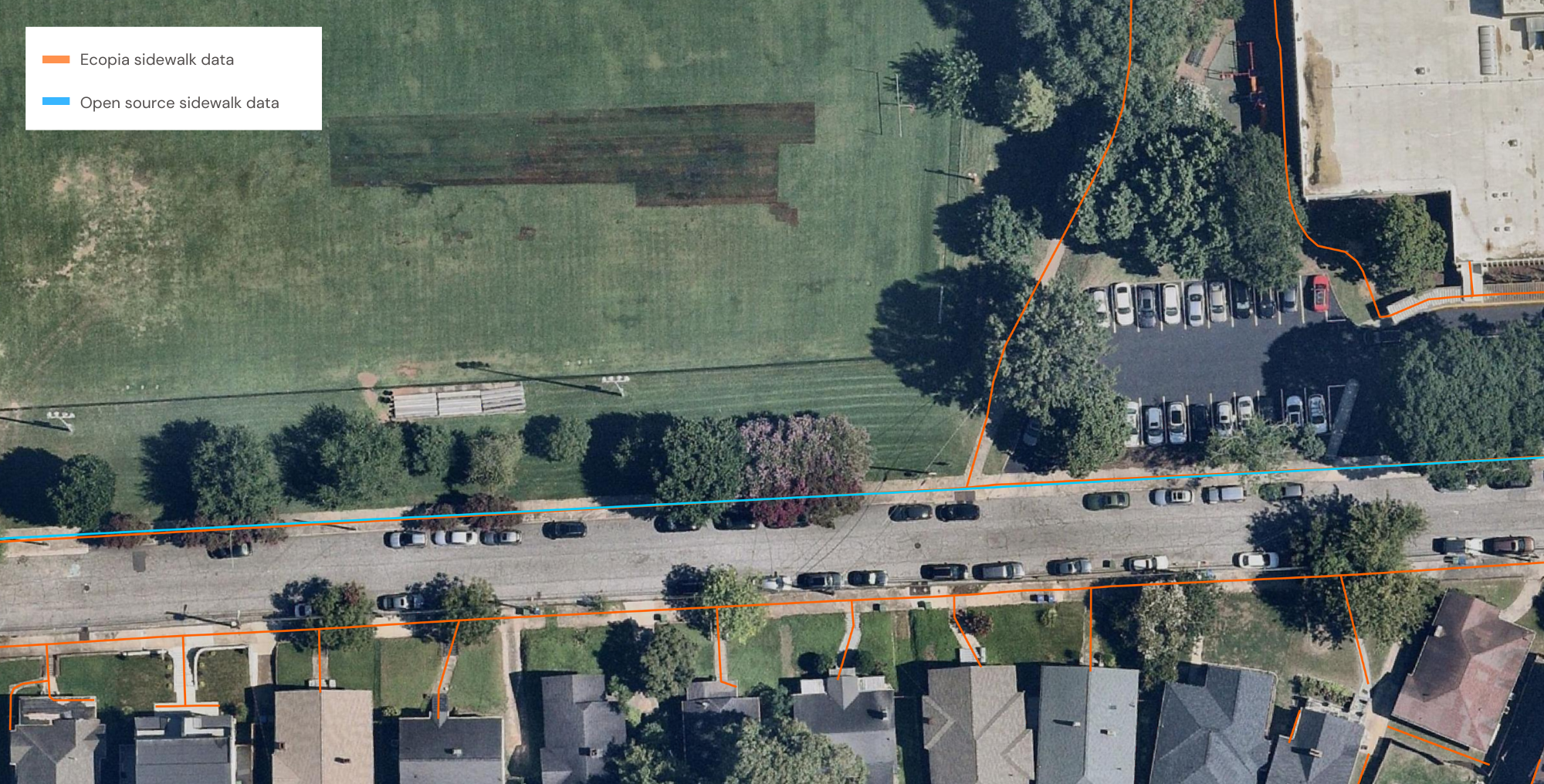
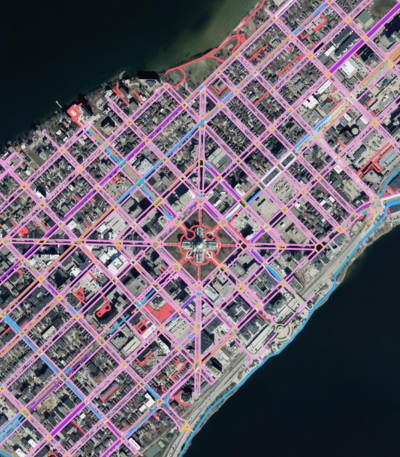
Ecopia’s imagery-based AI feature extraction ensures that data is complete; this sample compares Ecopia’s pedestrian route data with another provider in Baltimore, Maryland.
Completeness refers to whether all relevant real-world features are captured in the dataset, ensuring there are no significant gaps that could impact visualizations, analysis, or decision-making. High completeness means the data fully represents the area of interest without missing critical elements. This directly aligns with recall, which measures how many actual features were detected.
Common questions to consider when evaluating geospatial data completeness include:
- Does the dataset include all the features listed in the schema?
- Are any individual features missing?
- Is coverage consistent across the entire area of interest, or are certain areas more complete than others?
Example: If your dataset is missing some sidewalks, buildings, or other features that are included in its specifications, there is a recall problem and a completeness issue.
Correctness
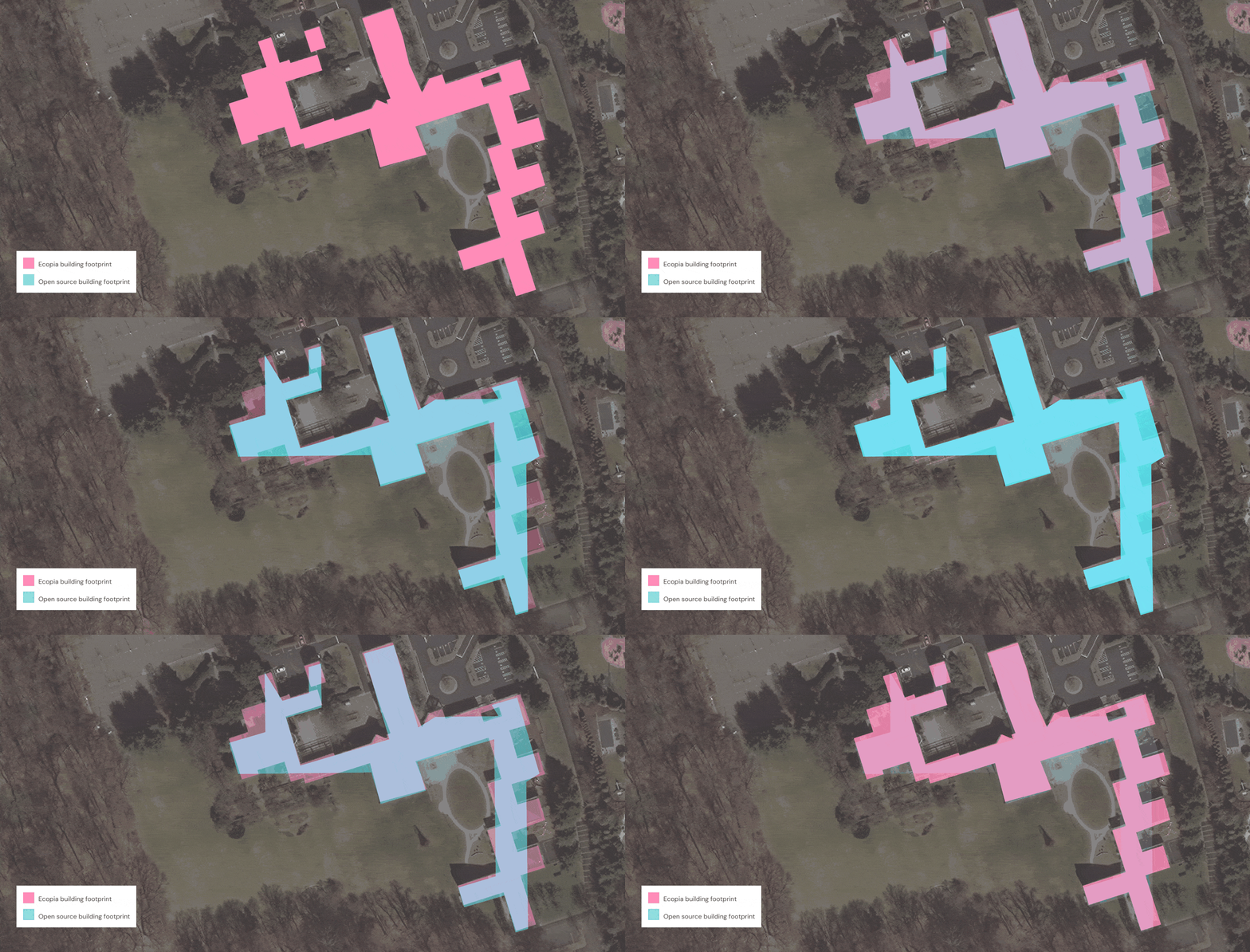
Correctness uses accuracy and precision to assess how close to the ground truth the data is. High correctness ensures that features are located and labeled appropriately, minimizing errors that could lead to incorrect insights.
Data correctness can be assessed by asking:
- Is the data accurate and error-free?
- Are geometries correctly positioned?
- Are features properly classified?
- Are the detected features actually real?
Example: Mapping a road where none exists or misclassifying it as a sidewalk creates a false positive, which indicates low precision and poor accuracy.
Consistency
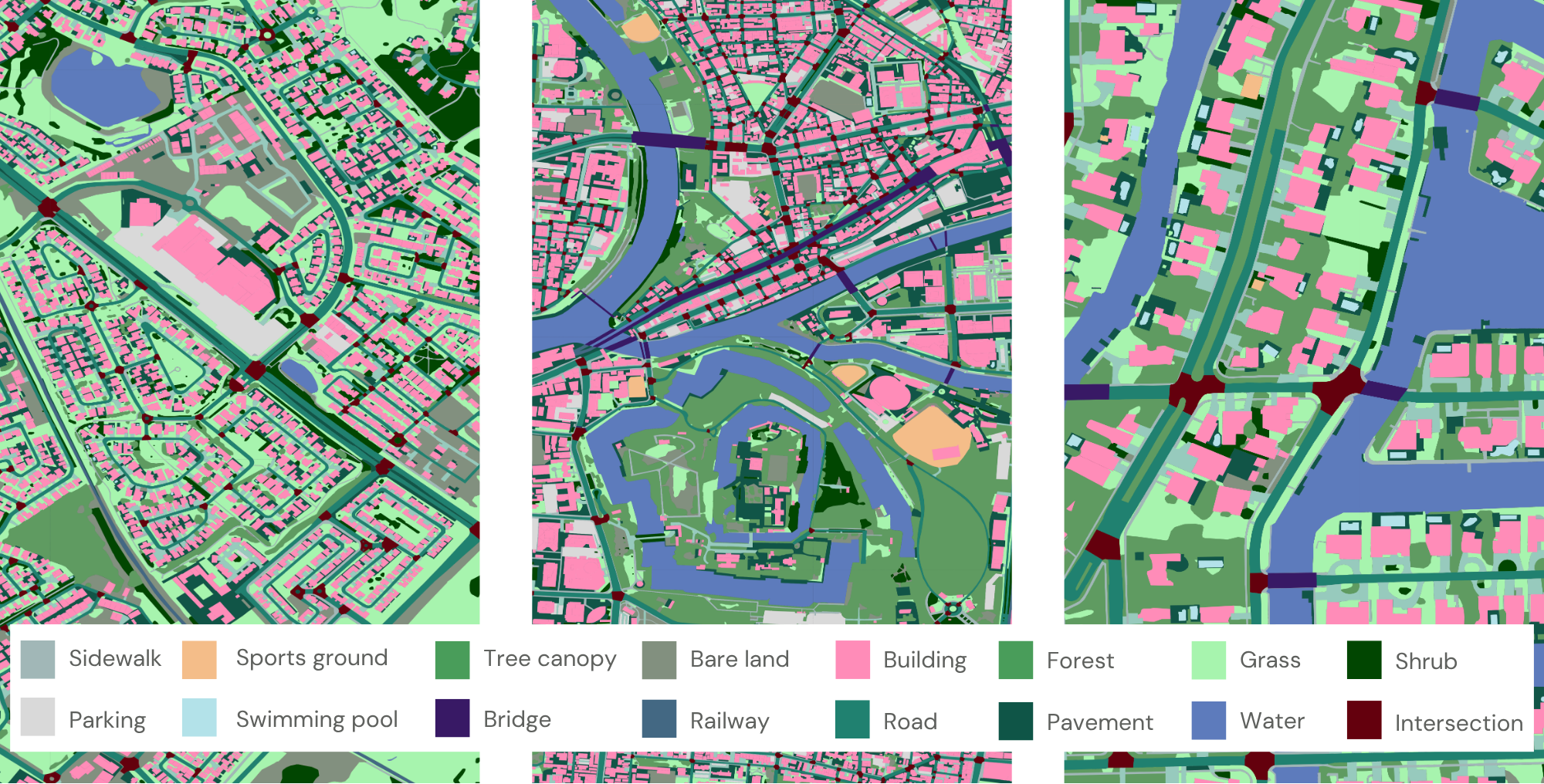
Consistency describes how uniformly data is structured, classified, and represented across the dataset. Consistent data ensures that features are defined and labeled the same way across regions, enabling reliable comparisons and seamless integration into workflows. Consistency issues can skew the measurement of false negatives and false positives, as well as thematic accuracy.
Evaluating data for consistency, especially across diverse geographies, includes considerations like:
- Is the data uniform across the dataset?
- Are features classified the same way throughout?
- Is the schema standardized?
Example: If the “residential” label is used differently in one region compared to another, accuracy, precision, and recall might still be high, but consistency is low.
Currency
[slider]
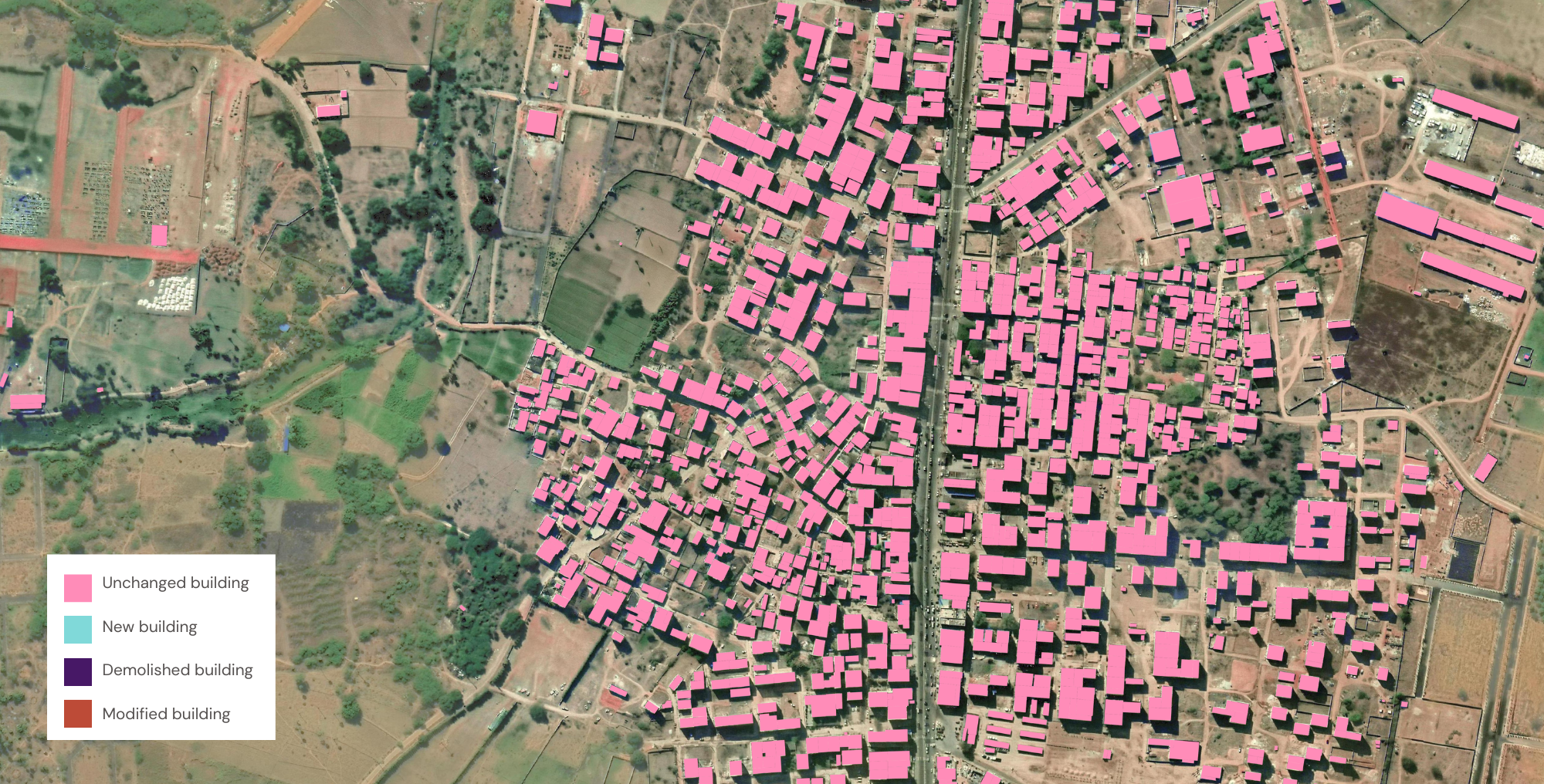
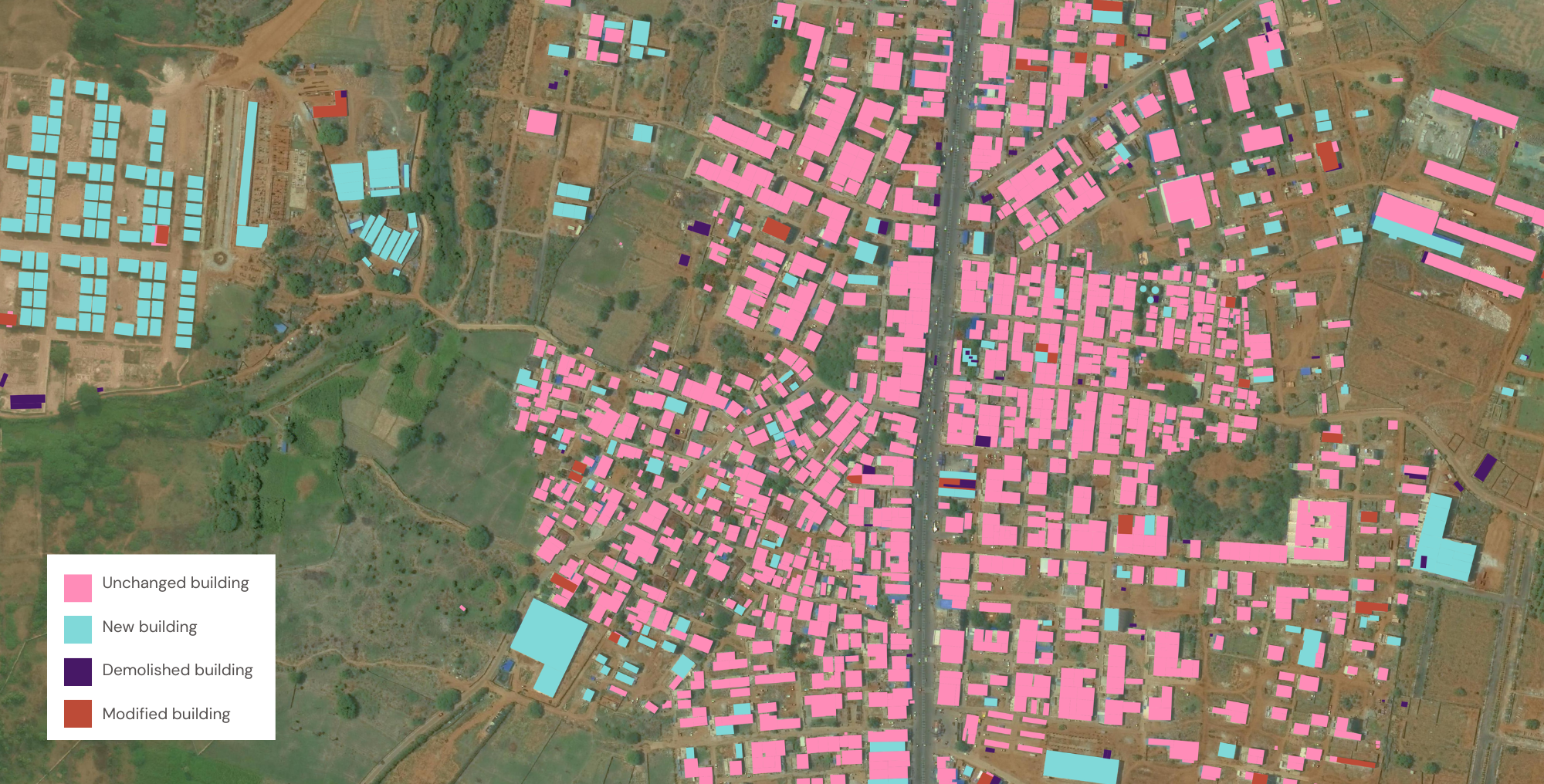
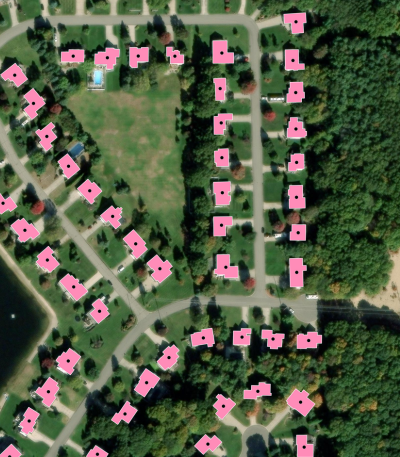
Ecopia’s AI map engine efficiently detects changes from one imagery vintage to extract new or modified features and keep data up-to-date; this example shows building change detection in Hyderabad, India from 2023-2024.
Currency reflects how up-to-date the dataset is relative to current real-world conditions. High currency means the data captures recent changes and remains relevant for time-sensitive applications and accurate map visualizations. Currency can have direct implications on accuracy, precision, and recall if data is stale and being compared to the latest ground truth.
Data currency is often evaluated by considering:
- When was the data created?
- Does it reflect recent changes in the real world?
- How frequently is it updated?
Example: Outdated data may not reflect changes in land use, creating accuracy, precision, and recall issues by including buildings that have been demolished since the data was created.
AI vs. Manual Mapping: The Impact on Geospatial Data Quality
As demand for high-resolution, up-to-date mapping data grows in a rapidly changing world, organizations are increasingly weighing traditional and AI-driven approaches to data creation and maintenance.
Traditional data creation methods rely on manual digitization, where analysts interpret imagery and trace features by hand. While human-traced map features are often highly accurate, this approach is slow, expensive, and difficult to scale - often resulting in incomplete and outdated datasets. What’s more, data that has been manually digitized by multiple individuals can have lower consistency due to different training backgrounds, methodologies, or interpretations. These limitations directly impact key quality metrics like geospatial data accuracy, precision, recall, and F1 score, making it challenging to maintain reliable data across large or rapidly changing regions.
On the other hand, many automated mapping solutions optimize for scale and speed over quality. These approaches typically rely on generalized models or lower-resolution inputs to rapidly generate large volumes of data, but this can introduce trade-offs in accuracy, precision, and recall. Features may be oversimplified, misclassified, or misaligned, leading to higher rates of false positives and false negatives that impact downstream analysis. While these methods can quickly produce broad coverage, they often fall short when evaluated against key metrics, making them less suitable for applications that require high-confidence, decision-grade data.
Speed, Scale, & Quality: Ecopia’s Approach to AI Mapping
Ecopia’s AI-based mapping engine transforms this process by automating feature extraction from high-resolution imagery without sacrificing geospatial data quality metrics or the 4 Cs. Instead of months or years of manual effort, Ecopia’s AI systems generate high-quality vector data at continental scales in a matter of weeks. This enables significantly improved completeness, more consistent classification across regions, and higher data currency, ensuring datasets reflect real-world conditions. Because Ecopia’s AI map engine applies standardized logic at scale, they also reduce variability introduced by human interpretation, improving overall geospatial data consistency and correctness.
By automating feature extraction while maintaining data quality, Ecopia enables faster updates, broader coverage, and standardized outputs, and ensures data remains complete, current, and reliable over time. Data is available off-the-shelf or via custom order on Ecopia’s online data portal, making it easier than ever to harness the power of GeoAI for high-quality map visualizations, analytics, and decision-making.
To learn more, reach out to our team.
Learn more about Ecopia
Ready to get started?
